
Introduction
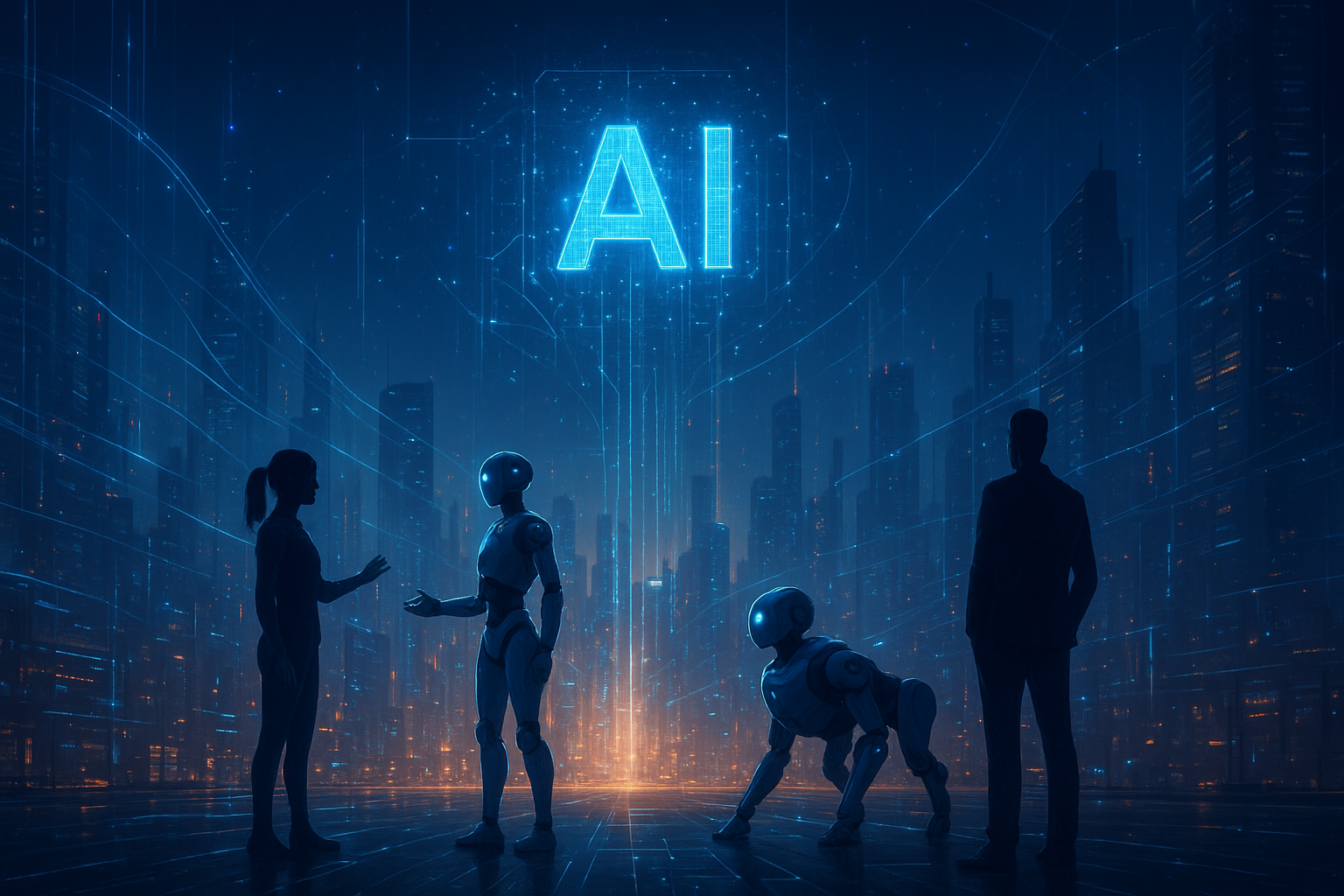
From being a future idea, artificial intelligence (AI) has developed into a revolutionary force that is influencing every facet of contemporary life. As 2026 approaches, artificial intelligence (AI) is evolving from a helpful tool to an intelligent collaborator that propels automation, innovation, and decision-making in a variety of sectors. The future of artificial intelligence in 2026, major technological developments, and how widespread use is redefining human potential and commercial expansion are all covered in this article.
At AI With Earn, we continue to explore how emerging technologies are reshaping the future. This article dives deep into AI’s next big leap in 2026, major global trends, and the challenges that will define the era of intelligent automation.
1. The Rise of Autonomous Agents and Agentic AI
The emergence of agentic AI—systems with the ability to reason, plan, and act independently—is one of the most important advancements anticipated by 2026. These agents can carry out tasks independently with little assistance from humans, in contrast to the prompt-based models of today. Related Reading: How AI Agents Are Changing Business Automation
- What it means: AI will move from reactive tools (like chatbots) to proactive systems that manage projects, schedule workflows, and even negotiate deals.
- Real-world examples: Automated financial advisors, self-learning healthcare assistants, and AI-powered logistics managers.
- Impact: Improved productivity, reduced operational costs, and 24/7 automated decision-making.
2. Integration of AI in Everyday Life
By 2026, AI will seamlessly integrate into our homes, workplaces, and cities. Smart homes will evolve beyond simple voice commands, anticipating human needs through contextual understanding and real-time learning.
- Smart cities: AI-driven traffic control, waste management, and energy distribution.
- Education: Personalized learning paths powered by AI tutors.
- Healthcare: Predictive diagnosis and real-time patient monitoring.
The future isn’t just about convenience — it’s about creating an ecosystem where AI enhances human potential through intelligent collaboration.
🧠 Explore more: Top AI Tools That Simplify Daily Life
3. The Shift Toward Ethical and Responsible AI
As AI becomes more influential, ethical AI governance will take center stage. The European Union’s AI Act (effective 2025) is setting global standards for transparency, accountability, and human oversight.
In 2026:
- Companies will be required to disclose how AI models make decisions.
- Bias detection and fairness auditing will become industry norms.
- Privacy-first AI solutions will dominate, ensuring user data protection.
This focus on ethics ensures that AI grows in a way that benefits society, not just technology giants.
4. The Role of Generative AI in Creative Industries
Generative AI has already revolutionized art, content creation, and design. By 2026, it will evolve into multi-modal creativity, capable of producing text, music, video, and 3D assets simultaneously.
- Applications: Film production, marketing campaigns, virtual reality design, and product prototyping.
- Human–AI collaboration: Artists will work alongside AI co-creators, turning imagination into digital masterpieces faster than ever before.
Rather than replacing creativity, AI will act as a creative amplifier, unlocking ideas that were once limited by time and skill.
5. The Future of Work: AI as a Co-Worker
AI will redefine workplaces, creating a balance between human intelligence and machine efficiency.
Predictions for 2026:
- 60% of enterprises will deploy AI copilots.
- Human-machine teams will boost productivity by 30%.
- AI literacy will become a core skill.
Check out our full guide: How to Prepare Your Career for the AI Future
AI won’t eliminate jobs — it will elevate human capabilities.

6. Industry-Wise Impact of AI in 2026
| Industry | Transformation by AI |
|---|---|
| Healthcare | Precision diagnosis, robotic surgery, personalized medicine |
| Finance | Automated fraud detection, real-time trading |
| Agriculture | Smart irrigation, predictive crop analytics |
| Manufacturing | Predictive maintenance, quality control |
| Retail | Hyper-personalized shopping, demand forecasting |
AI’s adaptability across industries is what makes it the ultimate game-changer.
🔗 You may also like: AI in Healthcare: How Smart Tech is Saving Lives
7. Physical AI and Robotics: The Next Frontier
By 2026, physical AI — combining robotics and cognitive systems — will revolutionize sectors like logistics, construction, and defense.
- Use Cases: Autonomous delivery drones, warehouse robots, and medical assistants.
- Benefits: Precision, safety, and 24/7 operation.
Learn more from MIT Technology Review – The Rise of Physical AI
This fusion of intelligence and robotics will blur the line between the digital and physical worlds.
8. Challenges and Risks Ahead
Despite innovation, challenges persist:
- Data privacy and surveillance concerns.
- High energy demands from large AI models.
- Algorithmic bias and ethical dilemmas.
- Need for stronger global regulation.
At AI With Earn, we believe these challenges also represent opportunities — for innovation that’s ethical, efficient, and human-centered.
Conclusion: A Human-AI Collaboration Era
In 2026, collaboration rather than rivalry between people and robots will characterize artificial intelligence. AI will enable people to accomplish more, boost creativity, and automate complexity.
How well we adjust to AI is more important than whether it will alter the world.